
Small-Space Homestead Planning for Ordinary UK Homes
Building a small-space homestead isn’t about land ownership or grand plans — it’s about learning what’s possible in the space you already have.
After years of growing food, preserving, and building self-reliance from an ordinary UK home, we’ve learned that thoughtful planning matters far more than square footage.
This guide shares a realistic, UK-specific approach to small-space homestead planning, rooted in lived experience rather than idealised homesteading fantasies.
A small-space homestead focuses on function, rhythm, and repeatable systems rather than scale. In UK homes — terraces, semis, flats with balconies — success depends on choosing projects that earn their place and support everyday life.

Effective small-space homestead planning prioritises:
- High-impact skills that improve daily resilience
- Crops and projects that match real eating habits
- Closed-loop systems that reduce waste and effort
- Gradual skill-building instead of all-at-once transformation
Rather than chasing full self-sufficiency, a well-planned small-space homestead builds self-reliance — the ability to meet more needs confidently over time. This might look like growing a few reliable crops, preserving food you already enjoy, or learning to make one staple well before adding another.
In the UK context, this also means working with:
- Seasonal light and weather constraints
- Smaller gardens and shared outdoor spaces
- Time-limited schedules and busy households
Planning allows your homestead efforts to support your life rather than compete with it. With clear priorities and realistic goals, even the smallest spaces can become productive, meaningful, and resilient.
Once you stop trying to do everything, a small-space homestead becomes not only achievable, but genuinely enjoyable.
The sections below break this process into practical, manageable layers you can adapt to your own home.
Why Small Spaces Matter More Than Ever
The myth of land-dependent homesteading
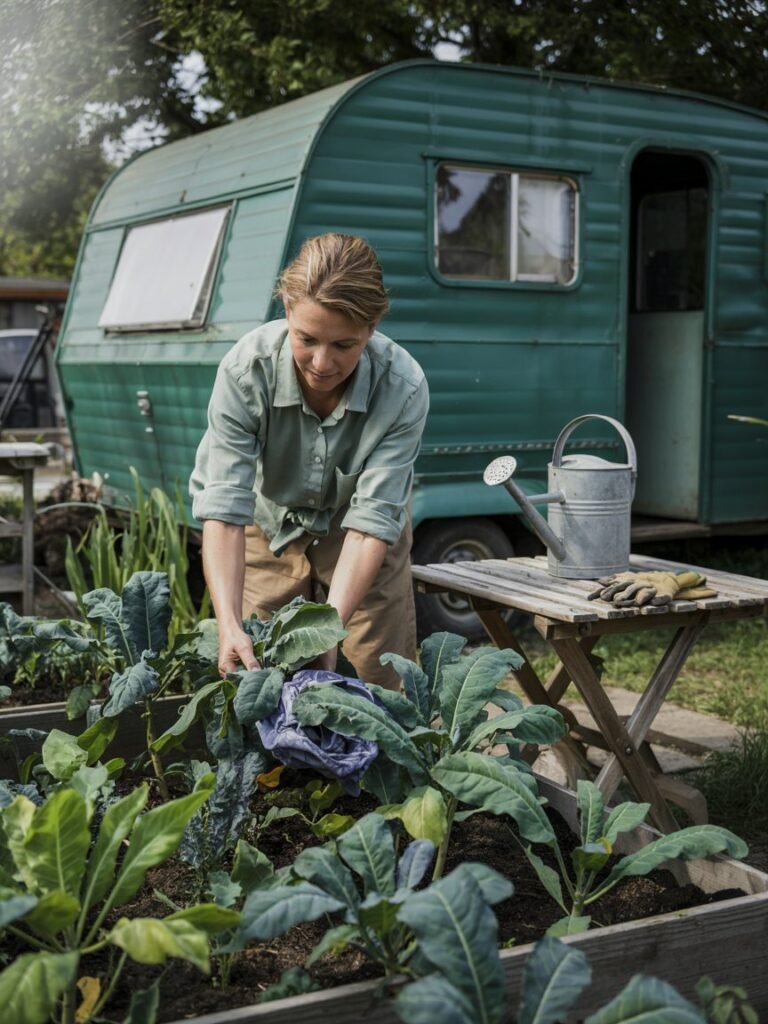
Homesteading is often portrayed as something that requires acres of land, endless time, and a complete lifestyle overhaul. That belief alone stops many people from starting. If you live in a terrace, a semi, or a flat with a small garden, it can feel as though self-reliance simply isn’t an option.
The truth is far more encouraging: homesteading has never really been about land.
Where real homesteading actually happens
Most practical homesteading already takes place in ordinary UK homes. It shows up in small, everyday actions:
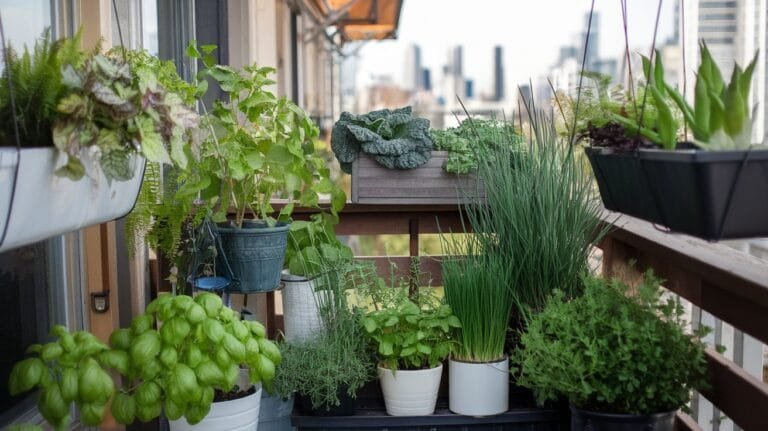
- Herbs grown on windowsills
- Food preserved in modest kitchens
- A few containers on patios or balconies
- Skills learned slowly alongside work and family life
A small-space homestead reflects how most people actually live — not an idealised version built around land ownership.
Small systems vs large, fragile ones
Limited space forces clarity. When you can’t do everything, you choose what matters.
| Small-Space Homestead Systems | Large-Scale Systems |
|---|---|
| Focused and repeatable | Often complex and demanding |
| Easier to maintain | High labour and time costs |
| Flexible in busy seasons | Fragile when life gets in the way |
| Built around real needs | Often built around scale |
A well-planned small-space homestead is often more resilient because it fits real life.
Starting small (and why it works)
Our own journey didn’t begin with land or long-term plans. It started with:
- Tubs on a patio
- Herbs on windowsills
- Simple kitchen projects like yoghurt making and preserving food we already enjoyed
Those early steps weren’t impressive — but they were effective. Each small success built confidence, reduced reliance on convenience food, and proved that a small-space homestead could grow gradually and sustainably.
Why planning matters
Without planning, small spaces can quickly become overwhelming. Too many projects, too many ideas, and not enough capacity leads to burnout and wasted effort.
Thoughtful small-space homestead planning helps you:
- Prioritise what actually supports your household
- Avoid novelty projects that don’t earn their place
- Build skills slowly, without pressure
Key takeaway:
A small-space homestead isn’t a compromise. It’s a refinement — focused, intentional, and designed to work in real UK homes.
Once you stop seeing space as the problem, the next question becomes much clearer:
what’s actually worth prioritising first in a small-space homestead?
Setting Realistic Priorities for a Small-Space Homestead
Focus on high-impact changes
In a small-space homestead, priorities matter more than ambition. With limited room, time, and energy, the most effective approach is to focus on changes that reduce reliance quickly rather than projects that simply add complexity.
High-impact priorities usually share three traits:
- They support everyday meals or household routines
- They can be repeated easily, week after week
- They build confidence as well as capability
This is why food-first decision making works so well in small spaces. Growing, preserving, or making foods you already eat delivers immediate value and keeps motivation grounded in real life.
Why novelty projects often derail progress
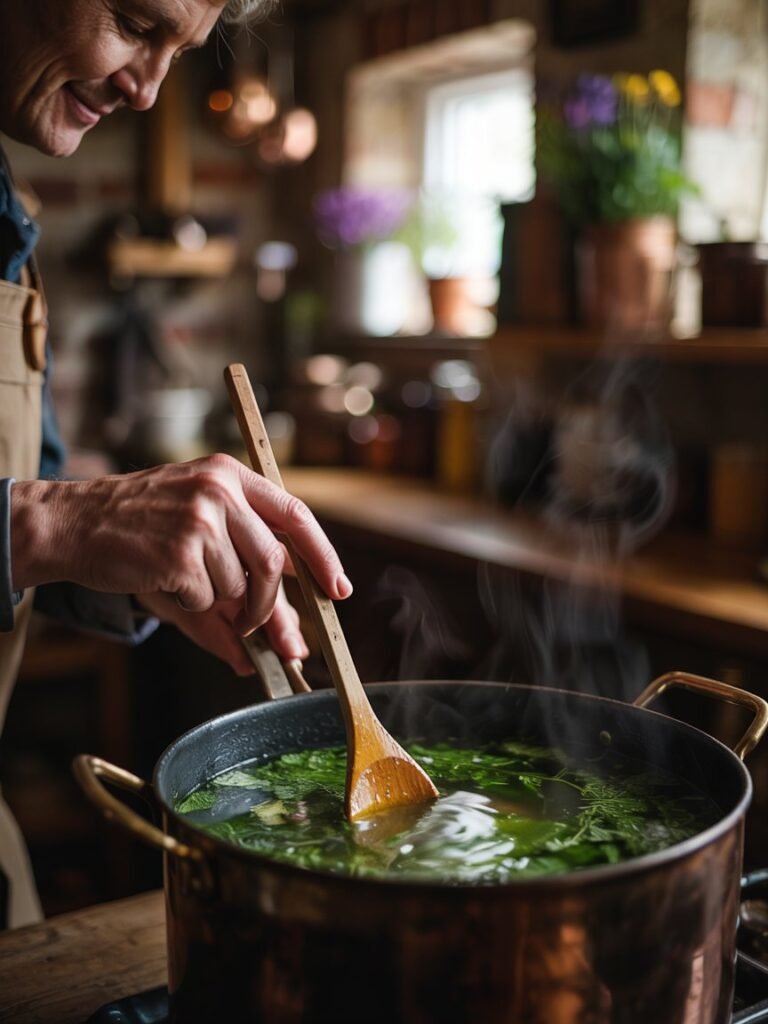
Novelty has a cost in small spaces. Projects chosen for excitement rather than usefulness often demand disproportionate time, equipment, or attention — and are the first to be abandoned when life gets busy.
In a small-space homestead, novelty tends to:
- Crowd out reliable systems
- Increase overwhelm rather than resilience
- Create guilt when projects go unfinished
That doesn’t mean experimentation has no place — it simply means it should come after dependable systems are established.
Choosing reliability over trends
Consistency is one of the most underrated strengths of a successful small-space homestead. Repeating what works — even if it feels unglamorous — compounds skill, efficiency, and confidence over time.
Reliable systems:
- Improve with repetition
- Require less mental effort
- Fit naturally into existing routines
In small spaces, consistency almost always beats constant experimentation.
Planning as a practical tool
Clear priorities are easier to maintain when they’re written down. A simple planning system helps you stay focused on what genuinely supports your household, rather than what feels urgent or inspiring in the moment.
Product Suggestion:
Simple Homestead Planning Journal — a structured, low-pressure way to track goals, seasonal priorities, and repeatable wins in a small-space homestead.
Once priorities are clear, the next step is applying them to real systems — including one of the most common questions in small spaces: can chickens actually work in a small garden?
Chickens in a Small Garden — What Actually Works
Keeping chickens is often seen as the dividing line between “gardening” and a true small-space homestead. The good news is that hens can work exceptionally well in small gardens — when they’re planned around management, not numbers.
Small, manageable flocks
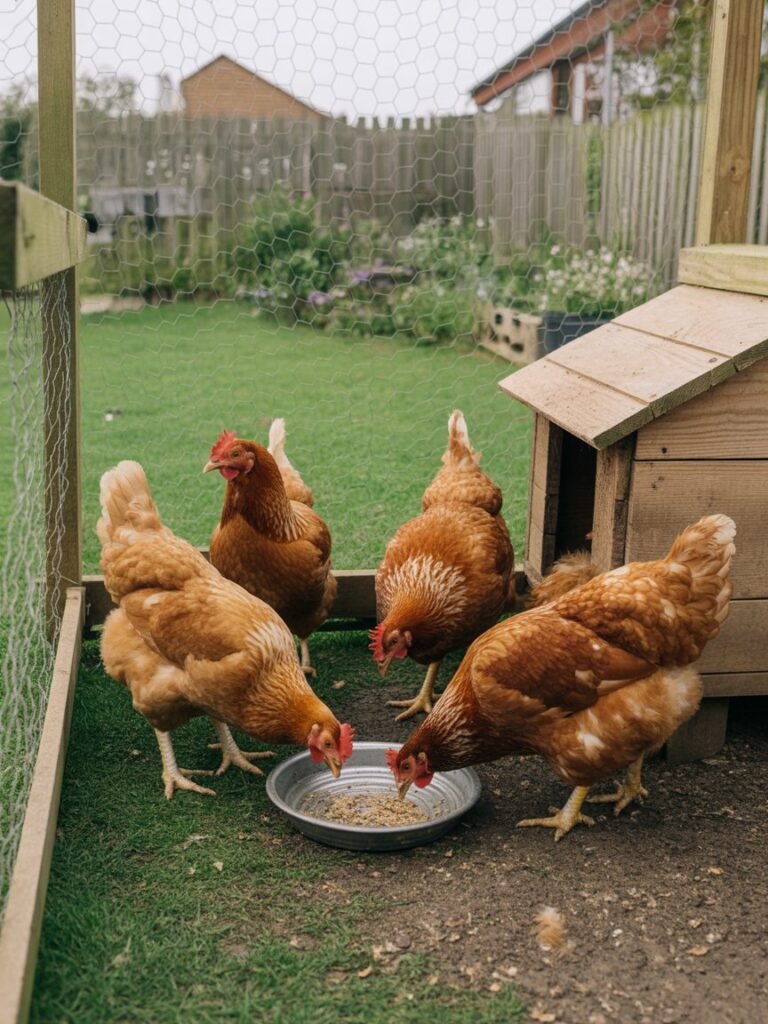
In a small-space homestead, fewer birds are almost always better. A modest flock is easier to care for, quieter, and far less likely to overwhelm your garden or your neighbours.
Smaller flocks offer clear advantages:
- Easier daily care and health checks
- Lower noise and reduced neighbour impact
- Manageable manure output
- Less pressure on limited outdoor space
For most households, a small number of hens provides more than enough eggs without creating unnecessary work, whether those hens are bought as point-of-lay birds or responsibly rescued through organisations such as the British Hen Welfare Trust.
Eggs as a foundational skill
Egg production is one of the most reliable and confidence-building outputs of a small-space homestead. It delivers consistent food, reduces reliance on supermarkets, and builds trust in your own systems.
Early on, we learned that confidence came not from producing lots of eggs, but from producing them reliably. Knowing that breakfast eggs were there each morning — without complexity or constant intervention — made chickens feel practical rather than overwhelming.
Eggs also unlock secondary skills, from mayonnaise and baking to preserving and meal planning, making them a cornerstone rather than a novelty.
Designing chicken systems for UK gardens
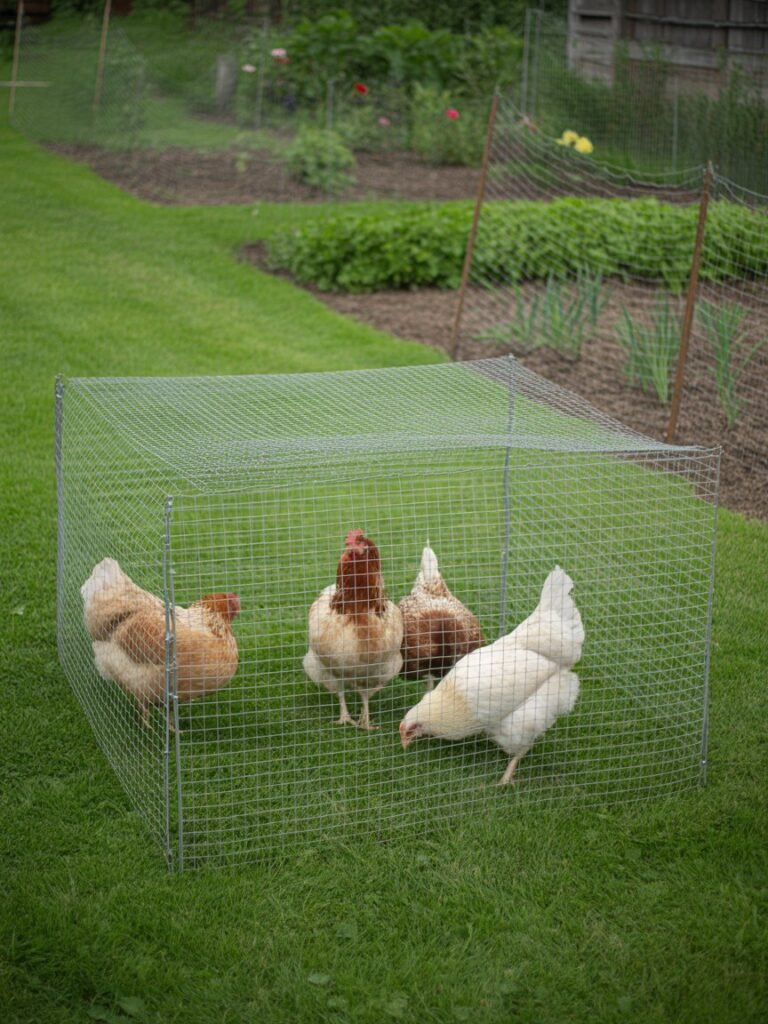
Successful chicken keeping in small spaces depends on flexible design. UK gardens face real constraints — neighbours, changing weather, and occasional disease control measures such as avian flu restrictions.
Designing for flexibility makes a huge difference:
- Adjustable runs that can be made larger or smaller as needed
- Covered areas for periods of mandatory housing (such as DEFRA’s yearly Avian Flu -known as Bird Flu- ‘flockdown’ restrictions)
- Temporary runs that allow limited free ranging without damaging the garden
In practice, this flexibility has been invaluable. Being able to reduce the run size temporarily — for example, when a visitor’s car needed space — or expand it again later kept chickens workable without stress. Temporary runs also allowed supervised free ranging while protecting planting areas, preserving both the garden and the birds’ welfare.
Noise, neighbours, and welfare
A well-managed small-space homestead considers the wider environment. Chickens can be surprisingly neighbour-friendly when:
- Flock size is kept sensible
- Housing is clean and well-ventilated
- Birds have enough enrichment and space
Good welfare directly reduces noise, stress, and problem behaviours — benefiting both birds and humans.
Manure, compost, and closed-loop benefits
Chickens contribute more than eggs. Even in a small garden, they provide valuable inputs:
- Nitrogen-rich manure for compost systems
- Food waste reduction
- Integration into wider soil-building efforts
These closed-loop benefits are especially valuable in a small-space homestead, where every output needs to support something else.
Once chickens are working with your space rather than against it, the next question becomes obvious: what food is actually worth growing in a small-space homestead?
Growing Food That Earns Its Place
In a small-space homestead, every plant needs a purpose. Limited growing space means crops should be chosen for usefulness, reliability, and how well they integrate into everyday meals — not for novelty or aesthetics alone.
Crops worth growing in a small-space homestead
The most effective crops in a small-space homestead tend to be those that deliver a high return for the space they take up and fit naturally into regular cooking.
Reliable, high-value choices include:
- Peas – productive, space-efficient, and easy to preserve or eat fresh
- Tomatoes – versatile, high-yielding, and well-suited to containers
- Herbs – compact, repeat-harvest crops with constant kitchen value
- Salad staples – quick-growing, cut-and-come-again, and ideal for small beds or pots
These crops earn their place because they reduce reliance on shop-bought food and can be grown in quantities that are genuinely manageable.
Linking crops directly to meals
Food-first thinking is essential in a small-space homestead. Growing choices should connect directly to what you already eat, cook, and preserve.
Before planting, it helps to ask:
- Do we regularly eat this?
- Can it be used in multiple meals?
- Will it be preserved or eaten fresh without waste?
When crops are chosen with meals in mind, harvesting feels useful rather than burdensome, and growing becomes part of everyday life instead of an extra task.
What not to grow
Some crops simply don’t justify the space they require. In a small-space homestead, these often include:
- Space-hungry novelties that produce small or inconsistent yields
- Crops you don’t genuinely enjoy eating, no matter how appealing they look
Growing food you feel obliged to use — rather than excited to cook — leads to waste and frustration. In small spaces, restraint is often more productive than variety.
Once growing choices are aligned with real meals, the next step is making those harvests work harder — through preserving, batch cooking, and everyday kitchen skills.
Making More From What You Grow (or Source Locally)
In a small-space homestead, preserving isn’t about filling shelves for the sake of it — it’s about extending the usefulness of food you already enjoy. When space is limited, preservation works best as a support system for everyday meals rather than a standalone hobby.
Preserving what you already love
The most sustainable preserving projects start with foods you genuinely eat. Turning familiar ingredients into shelf-stable or freezer-friendly forms reduces waste and makes preservation feel practical rather than aspirational.
Simple, high-impact examples include:
- Homemade mayonnaise using fresh eggs
- Sauces that mirror meals you cook regularly
- Soups designed for quick, nourishing meals
These projects fit easily into a small-space homestead because they build directly on existing habits.
Convenience foods for busy real life
Preserving supports self-reliance best when it saves time, not adds pressure. In a small-space homestead, the goal is to create convenience foods that make everyday life easier.
Well-chosen preserves can:
- Reduce reliance on ready meals
- Support busy workdays and low-energy evenings
- Prevent fresh food from going to waste
Batch cooking, freezing, and canning all help bridge the gap between intention and reality.
Canning and freezing as food security tools
Food security in small spaces isn’t about volume — it’s about reliability. A modest freezer stash or a few jars of dependable meals provides reassurance and flexibility without overwhelming storage.
In a small-space homestead, canning and freezing:
- Spread seasonal abundance across the year
- Reduce last-minute shopping
- Increase confidence in household systems
Tools that make preserving manageable
Clear instructions and the right tools remove much of the friction from preserving, especially when space is tight.
Product Suggestion:
Beginner Preserving Starter Kit — a simple, space-efficient set of tools designed for small kitchens and practical, everyday preserving projects.
Once preserving is working quietly in the background, the next step is learning how to make everyday staples from scratch — without turning the kitchen into a second full-time job.
Learning Everyday Staples at Home
Yoghurt, Fermentation & Simple Tools
Learning to make everyday staples is one of the most effective upgrades you can make in a small-space homestead. These skills don’t require much space, produce quick wins, and build confidence faster than many growing projects.
Using simple tools to reduce friction
In small kitchens, tools matter — but only when they earn their keep. Multi-use appliances can remove many of the barriers that stop people from trying new skills.
Tools like the Instant Pot simplify processes such as yoghurt making by:
- Holding stable temperatures automatically
- Reducing hands-on time
- Making results more repeatable
For a small-space homestead, this reliability is crucial. Fewer failed batches mean less waste, less frustration, and more willingness to keep going.
Accepting learning curves as part of resilience
Not every batch will work perfectly — and that’s normal. Skill-building in a small-space homestead is cumulative, not instant.
Learning curves are valuable because they:
- Teach troubleshooting rather than perfection
- Build confidence through repetition
- Encourage adaptability rather than rigid routines
Resilience isn’t built by never failing; it’s built by learning what to do when something doesn’t work.
Homemade Drinks & Fermentation
Fermentation is one of the most space-efficient skills you can learn. It requires minimal equipment, scales well, and delivers noticeable benefits quickly.
Kombucha as a low-barrier entry point
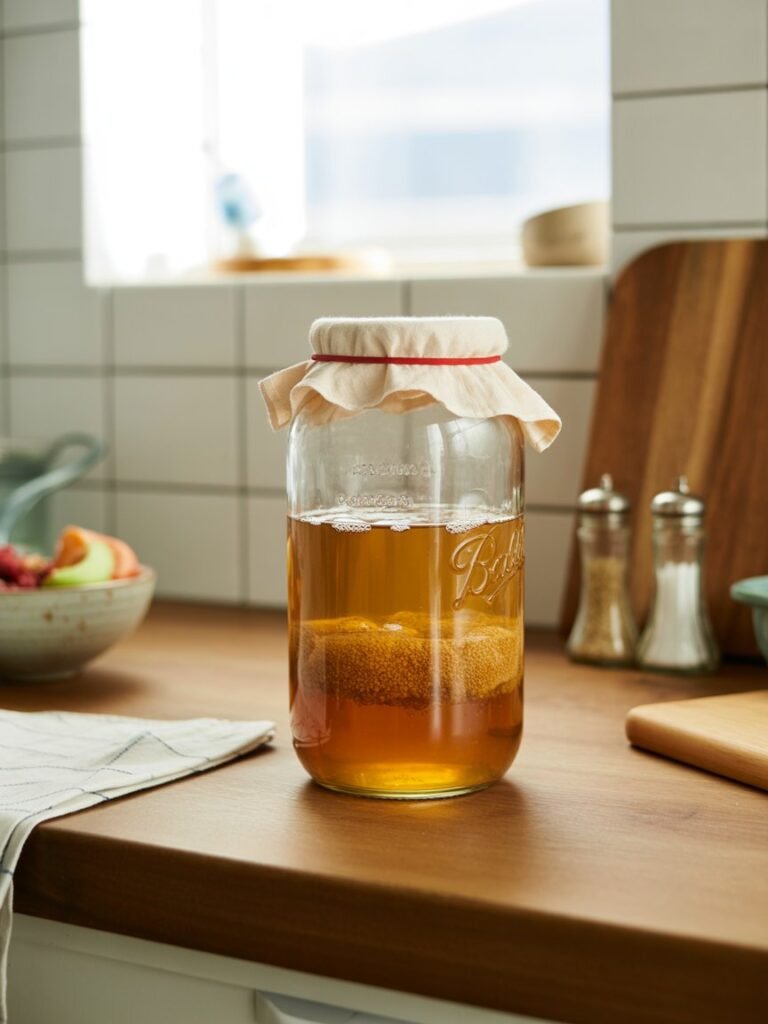
Kombucha is often an accessible first fermentation project in a small-space homestead. Once established, it becomes largely self-sustaining and easy to integrate into weekly routines.
Why it works well:
- Minimal active time
- Low ingredient costs
- Easily paused or scaled back
It offers a practical way to reduce shop-bought drinks without sacrificing enjoyment.
Ginger bug sodas as alternatives to shop-bought drinks

Ginger bug fermentation provides a flexible alternative to commercial soft drinks. It allows you to control ingredients while still producing fizzy, enjoyable results.
In a small-space homestead, ginger bug sodas:
- Reduce additives and packaging
- Make use of small batches
- Turn fermentation into a practical, repeatable habit
Once everyday staples and drinks are working smoothly at home, the focus naturally widens beyond the kitchen — to how food is sourced in the first place, and how buying local fits into a small-space homestead.
Buying Local Without Perfection
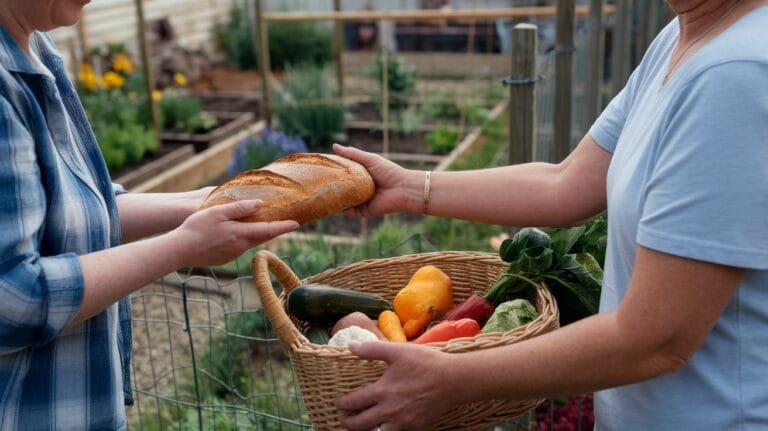
A small-space homestead doesn’t exist in isolation. For most people, growing and making are only part of the picture — buying food is still necessary. The goal isn’t to avoid shops entirely, but to be more intentional about where food comes from and why.
Supporting local where it makes sense
Buying local works best when it’s practical, repeatable, and aligned with everyday life. In a small-space homestead, this often means prioritising a few key swaps rather than attempting a complete overhaul.
Examples that work well in the UK include:
- Milk vending machines and local dairies
- Farm shops for staples you can’t grow
- Seasonal veg boxes that match your cooking habits
- Meat boxes used occasionally, not exclusively
These choices support British producers while keeping food sourcing realistic.
If you’re not sure what’s around you, check out Produce and Provide. It’s a great website that helps people find local producers around them using a simple interactive map.
Making supermarkets the exception, not the default
Supermarkets are convenient — and pretending otherwise creates unnecessary pressure. In a small-space homestead, progress comes from reducing dependence, not eliminating it overnight.
A useful mindset shift is to treat supermarkets as:
- A backup, not the foundation
- A supplement to local and homemade food
- A conscious choice rather than an automatic one
Even small changes in buying habits can strengthen self-reliance over time.
Progress over purity
Perfectionism is one of the fastest ways to abandon a small-space homestead altogether. Buying local isn’t about purity or labels — it’s about building habits that stick.
What matters most is consistency:
- Choosing better options when they’re available
- Accepting compromises when they’re not
- Avoiding guilt-driven decision making
A flexible approach keeps sourcing food sustainable — financially, emotionally, and practically.
Once food sourcing becomes more intentional, the focus naturally shifts inward — from where food comes from to how much independence is actually realistic in everyday life.
Self-Reliance vs Self-Sufficiency
One of the biggest mindset shifts in a small-space homestead is letting go of the idea that you must do everything yourself to be “doing it properly”. For most people, full self-sufficiency isn’t realistic — and aiming for it often creates pressure rather than progress.
Why 100% self-sufficiency isn’t the goal
Complete self-sufficiency requires land, time, energy, and often a level of isolation that doesn’t suit modern life. In a small-space homestead, chasing that ideal can lead to frustration and burnout.
More importantly, it misunderstands what resilience actually looks like.
What self-reliance really means
Self-reliance is about capability, not isolation. It’s the confidence that you can meet more of your needs — even if you don’t always choose to.
In practice, self-reliance in a small-space homestead looks like:
- Knowing how to grow some food
- Being able to preserve and store what you use
- Making everyday staples when needed
- Having skills to fall back on during disruption
It’s about options, not absolutes.
Reducing dependence over time
Each skill you learn gently reduces reliance on external systems — supermarkets, supply chains, convenience products — without requiring a total lifestyle overhaul.
In a small-space homestead, progress often happens quietly:
- One habit replaced
- One skill added
- One system made more reliable
These small shifts compound over time.
Building confidence, not pressure
Perhaps the most overlooked benefit of self-reliance is confidence. Knowing you could cope — even if you hope you never have to — brings calm rather than stress.
A small-space homestead works best when it supports life instead of dominating it. Self-reliance leaves room for flexibility, community, and rest.
Once the focus shifts from “doing it all” to “doing what matters”, planning becomes less about restriction and more about intention — especially when looking ahead to the year as a whole.
Planning Your Small-Space Homestead for the Year Ahead
A small-space homestead benefits enormously from light-touch, seasonal planning. Not rigid schedules or productivity pressure — just enough structure to help you move forward without overwhelm.
Planning around seasons, not perfection
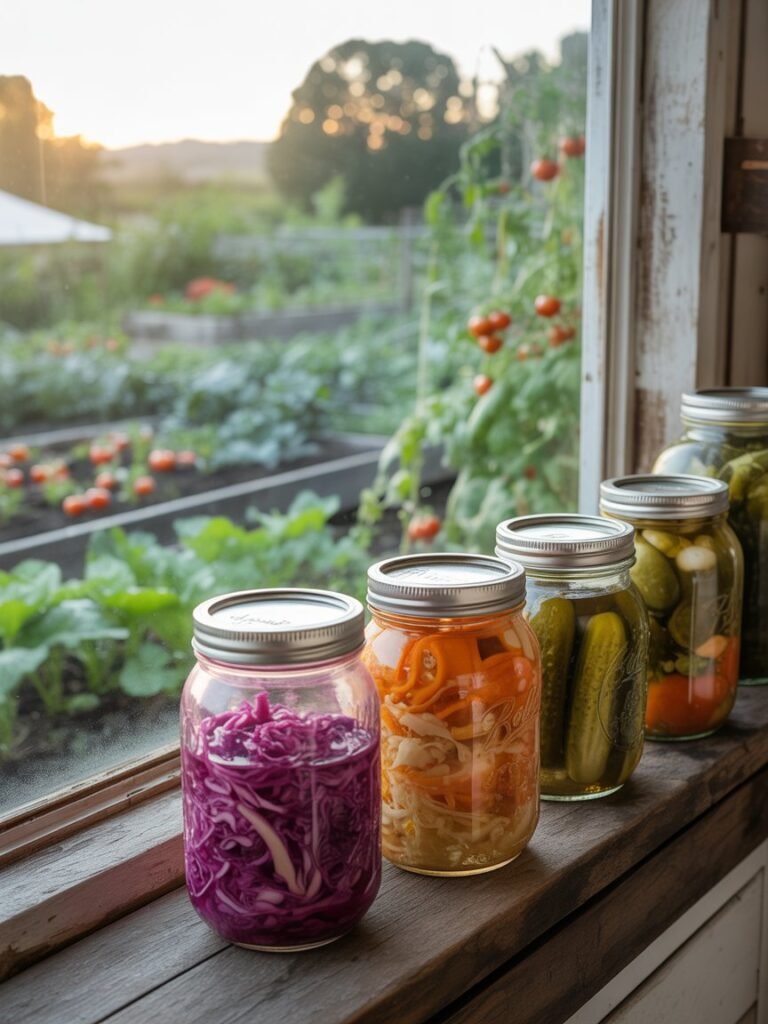
Seasonal planning works because it aligns effort with energy. In a small-space homestead, this means choosing projects that fit both the time of year and your capacity.
Helpful questions to ask at the start of each season include:
- What can realistically be grown or made now?
- What skills would support everyday life over the next few months?
- What can wait without consequence?
Planning seasonally reduces wasted effort and helps projects feel timely rather than forced.
Setting small goals that actually stick
Big plans often fail in small spaces. Clear, limited goals tend to succeed.
A simple and effective structure for a small-space homestead is:
- 3 core goals for the year (skills or systems, not outcomes)
- 3 small wins that feel achievable even in busy months
- 1 stretch goal that excites you but isn’t essential
This approach builds momentum without creating pressure.
Linking plans to real capacity
Planning only works when it reflects reality. In a small-space homestead, this means accounting for:
- Work and family commitments
- Energy levels across the year
- Storage and physical space limits
Plans should support your life — not compete with it.
Using planning as reassurance, not restriction
Written plans act as anchors. They reduce decision fatigue and make it easier to say no to projects that don’t fit your priorities.
A clear plan helps you return to what matters when motivation dips or distractions appear.
👉 Download the 2026 Homestead Goal Setting Worksheet (coming soon) — a printable designed specifically for small-space homesteads, with space for priorities, small wins, and one stretch goal.
With a clear plan in place, the final step is remembering that no small-space homestead is built alone — progress comes from community, shared knowledge, and starting where you are.
Conclusion: Building a Small-Space Homestead That Lasts
A small-space homestead grows through intention, not scale. By planning carefully, choosing reliable systems, and building skills gradually, ordinary UK homes can become places of real resilience and confidence.
If you’d like guidance delivered month by month — with seeds, DIY projects, and learning resources designed for real homes — Grow Make Learn offers a gentle, structured way to build self-reliance without overwhelm.
👉 Start your 2026 journey with the Grow Make Learn box — and grow your skills one small step at a time.