
DIY Ivy Dish Soap: The Free Natural Cleaner You Can Make Today
When it comes to cleaning, it’s easy to fall into the trap of using chemical-laden products, but what if you could make your own cleaning solution from something as simple as ivy? That’s right — the ivy growing right outside your window can be transformed into a powerful, natural DIY ivy dish soap!
For years I’ve been experimenting with low-waste, self-sufficient cleaning methods here in our tiny British homestead kitchen, from soap nuts to homemade laundry liquid. Ivy dish soap has been one of the most surprising discoveries — a genuinely effective, plant-based detergent you can make using nothing but common garden ivy.
With practical experience in herbal remedies, natural cleaning, and small-space sustainable living, I’ve tested several variations so you don’t have to.
In this post, I’ll walk you through how to make your own DIY ivy dish soap, share my experience with it, and show you how it can be a game-changer for your cleaning routine.
What Is DIY Ivy Dish Soap & Why Use It?
DIY Ivy Dish Soap is a natural, plant-based alternative to commercial dish soap. It’s made by extracting saponins from ivy leaves. Saponins are natural surfactants (detergents) found in various plants, including soap nuts, and they help break down grease and lift dirt — just like the chemicals in conventional dish soap.
Ivy is a particularly great option because it’s widely available, free, and full of saponins, making it an eco-friendly and budget-friendly solution for those of us looking to make our own cleaning products.
How to Make DIY Ivy Dish Soap (Step-by-Step)
Ingredients & Tools
- 2 large handfuls of ivy leaves (any type of common English ivy will do)
- 1L water
- Optional: Citrus peels or essential oils for fragrance
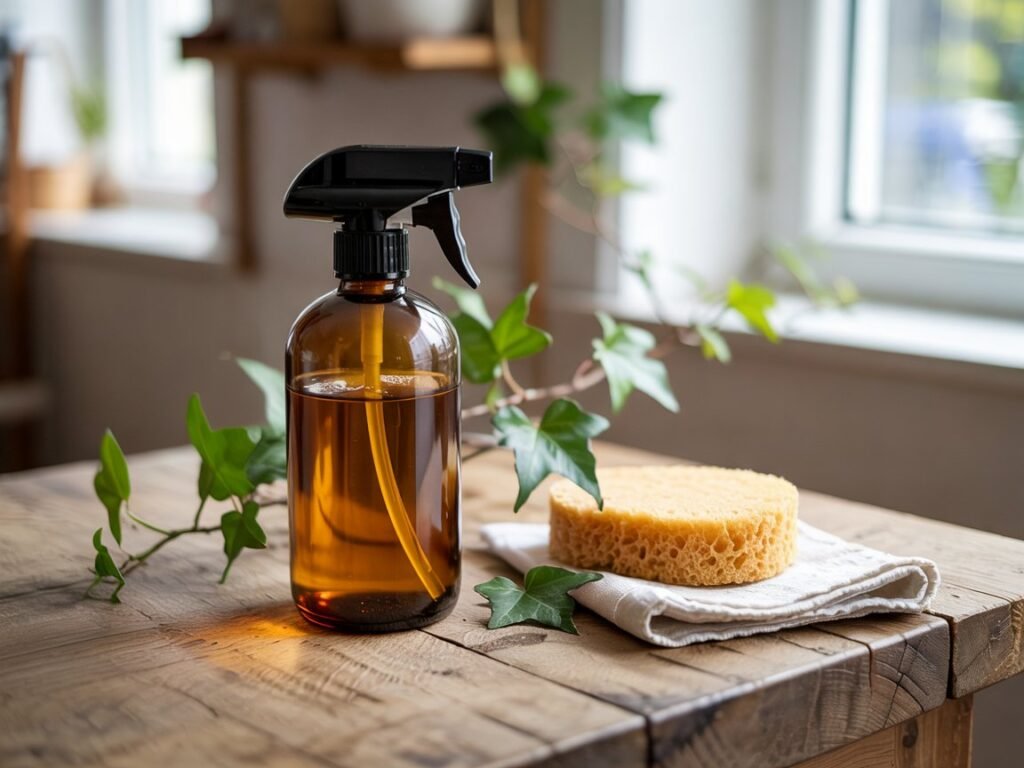
- Glass bottles for storage (I recommend 500ml Reusable Glass Bottles with a spray nozzle, which are perfect for dispensing your soap without waste)
- Stainless steel strainer
- Funnel for easy pouring into bottles
Method
- Harvest Ivy: Gather about two large handfuls of ivy leaves from a plant that you’re sure hasn’t been sprayed with pesticides. This method works best with mature leaves, but young leaves will work too.
- Wash & Bruise: Rinse the ivy leaves to remove dirt or dust. Lightly bruise them by gently crushing the leaves with your fingers to help release the saponins. I’ve recently found that whizzing the leaves up in a food processor works well for this too!
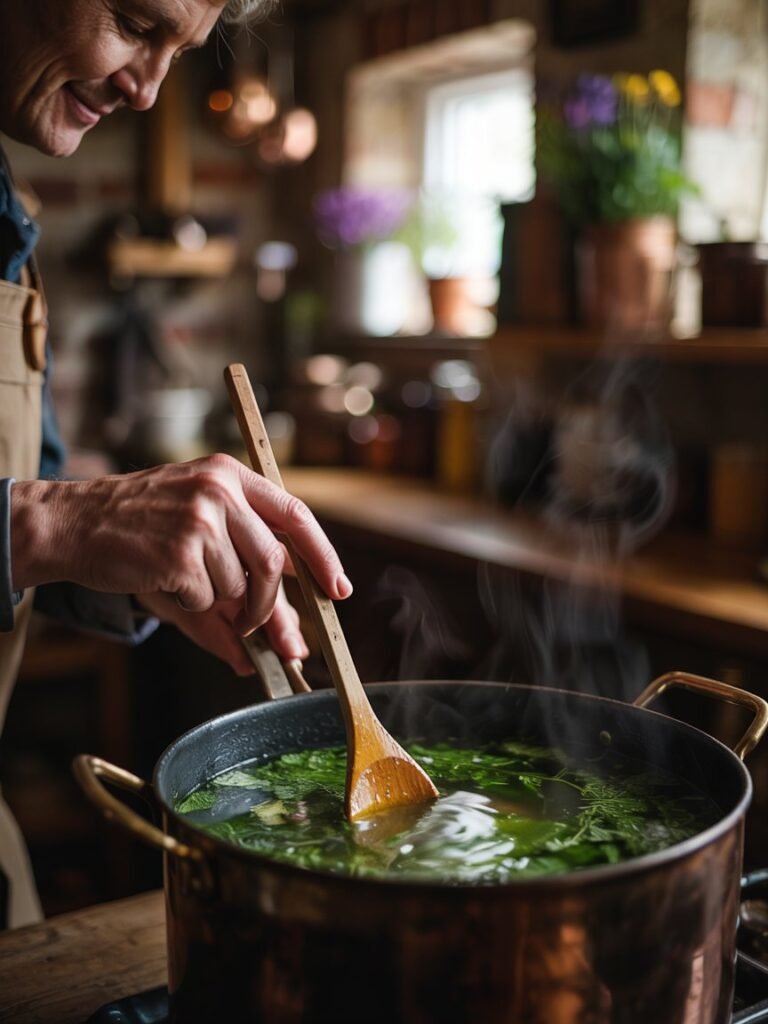
- Simmer: Place the leaves in a saucepan with 1 litre of water. Bring it to a boil, then lower the heat and simmer for 15–20 minutes.
- Steep: Turn off the heat and let the leaves steep in the water for 4–6 hours (or overnight, for a stronger concentration). You can use a slow cooker on low overnight too, this works well.
- Strain: Once cooled, strain the liquid into a glass container using a fine mesh strainer to remove the leaves.
- Store & Use: Transfer the liquid into glass storage bottles. For added fragrance, you can mix in a few drops of essential oils, such as lavender or lemon, which also have natural antibacterial properties.
Does DIY Ivy Dish Soap Actually Work? (My Honest Results)
Having tried many natural alternatives over the years, I was truly surprised by how well DIY Ivy Dish Soap worked. Here’s what I found:
Pros:
- Effective at cleaning: Surprisingly, it did a great job of cutting through mild grease and washing my dishes. The saponins in ivy act as a mild detergent, making this ideal for everyday washing.
- Cost-effective: Ivy grows everywhere and is entirely free, making this a perfect choice for anyone on a budget. You can forage right from your garden or nearby area, which is wonderful for self-sufficient living.
- Eco-friendly: This dish soap is entirely natural, biodegradable, and doesn’t contain any harmful chemicals — perfect for those of us focused on reducing waste and supporting a more sustainable lifestyle on a budget.
Cons:
- Not as strong on tough grease: While it works great for normal dishes, it didn’t quite get the baked-on grease off my roasting pans.
- Needs shaking: Because there are no artificial emulsifiers, the soap needs to be shaken before each use to mix the liquid.
- Short shelf life: Unlike commercial cleaners, ivy soap doesn’t contain preservatives, so it’s best used within 1–2 weeks or refrigerated. You can freeze this soap, meaning you can make large batches if that suits your time preferences.
But for a free, gentle alternative to chemical-laden cleaners, I was really impressed with the results!
Variations to Try (Advanced Recipes)
Once you’ve mastered the basic recipe, here are a few variations to enhance your DIY ivy dish soap:
Ivy & Lemon Anti-Grease Blend
Add citrus peels (like lemon or orange) to your brew for a fresh scent and extra grease-cutting power. Citrus is naturally acidic and helps break down oils, making it the perfect complement to ivy.
Ivy & Soap Nuts Supercharged Cleaner
If you’re looking for a more concentrated soap, add a handful of soap nuts into the mixture. Soap nuts are packed with saponins and will boost the cleaning power of your ivy solution. I generally prefer the result of soap nuts, but there is an additional cost involved with DIY soap nuts based cleaners. Mixing the two together makes your soap nuts mixture go further, adding to the budgeting benefits!
Ivy Concentrate for the Cleaning Cupboard
For a stronger, more concentrated cleaner, reduce the water by half, then store in a bottle. You can dilute it 1:5 when needed for a more powerful solution.
Common Questions About Ivy Dish Soap
Is ivy safe for pets?
DIY ivy dish soap is safe to use externally on pets but should not be ingested. Always ensure pets don’t chew on ivy leaves. I personally wouldn’t use my DIY ivy dish soap to clean Dilly (my dog), but I’m perfectly comfortable using it to lean his bowls and toys (they will be rinsed with water after).
Can I use it on skin?
While ivy is generally safe for external use, it is not recommended for direct skin contact, especially if you have sensitive skin. Always wear gloves when handling ivy. This soap does make a good mild laundry detergent though!
Does it foam?
Not as much as store-bought detergents, but foam isn’t necessary for effective cleaning. The saponins work to lift grime, not just to bubble up.
Conclusion
DIY Ivy Dish Soap is an incredibly simple, free, and eco-friendly way to clean your dishes and home. It aligns perfectly with the self-sufficiency ethos I’ve embraced on my journey to a more sustainable lifestyle. Plus, it’s an ideal winter project when budgets tighten and the garden offers up an abundance of free, natural resources.
So, why not give it a try? If you’ve been looking for ways to reduce waste and make your own natural cleaning products, ivy soap is a great place to start.
Don’t forget to join our Grow Make Learn community to get new DIY projects sent straight to your inbox.